Bookbinding Stitches: Hand Sewing and Machine-Sewn Approaches
Two paths to join pages
Stitching is the primary way to hold gatherings of paper together. Both hand-sewn and machine-sewn approaches have roles in a studio. The choice often depends on scale, desired repairability, and the aesthetic character of the text block. Below are observations to help decide which fits a given project.
Hand sewing: control and tradition
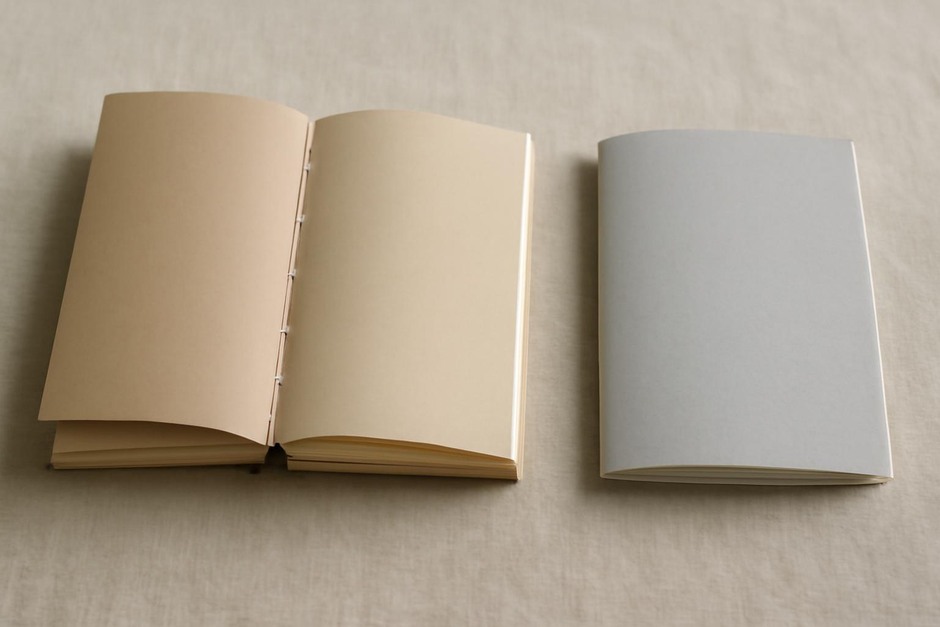
Hand-sewn bindings use techniques like kettle stitch, link stitch, and long stitch. The maker controls tension at each station and can adjust for paper thickness and sewing thread behavior. Hand sewing produces a rhythmic engagement with the book: stitch by stitch, the maker feels each connection. The result is often easier to repair because the stitches can be unpicked and resewn without complex disassembly.
Machine sewing: speed and regularity
Machine sewing, using a heavy-duty sewing machine or a sewing frame designed for books, offers speed and a very regular stitch. It is helpful when producing multiple copies or when consistent stitch length is important. Machine-sewn text blocks can be surprisingly strong, especially when paired with reinforced sewing supports. The downside may be less nuanced control over tension at the corners of sections and slightly more difficulty when a single stitch requires selective adjustment.
Thread choices and behavior
Handled thread works differently under hand and machine. Linen thread, waxed or unwaxed, takes well to hand techniques where a single thread loop is manually tightened. Machine sewing often benefits from strong synthetic threads that feed smoothly and resist snapping under rapid movement. That said, machines designed for bookbinding can handle waxed linen with the right tension settings and needles.
Aesthetics and structure
Hand sewing leaves subtle variations in stitch tension and sometimes visible thread tensioning marks on the spine. For many makers this is part of the craft appeal. Machine sewing presents a uniform edge and can be nearly invisible when the spine is concealed. Structurally, both methods reach acceptable durability when combined with good adhesives, headcaps, and covers; the crucial difference lies in how they are serviced later.
Repair and longevity
Hand-sewn bindings usually allow local repair: remove a section, resew it, and reattach. Machine-sewn bindings can be repaired too, but the process may require more disassembly or a specialized machine. Consider the intended lifespan and how frequently a bound object may be opened or altered; frequent use invites methods that make future repair clearer and more modular.
Practical combinations
Makers often mix approaches. A machine may be used to sew the bulk of a short edition, with hand stitching reserved for headbands, reinforcement at the ends, or for special copies. For single, bespoke books, hand sewing tends to offer more subtle control over the form. For short runs where consistency matters, machine sewing provides efficiency without necessarily sacrificing quality.
Neither approach is inherently superior. Instead, each invites different workflows and relationships to repairability, rhythm, and the visual language of craft. Trying both on comparable pamphlets yields the clearest understanding of how they will perform in a maker’s regular practice.