Finishing Oak: Water-Based and Oil-Based Approaches
Context and aims
Oak is a common choice for furniture and interiors because of its grain and durability. Choosing a finish changes the way oak looks, feels, and weathers. This note compares water-based and oil-based approaches with attention to application, surface qualities, maintenance, and how easy each is to repair.
Initial appearance
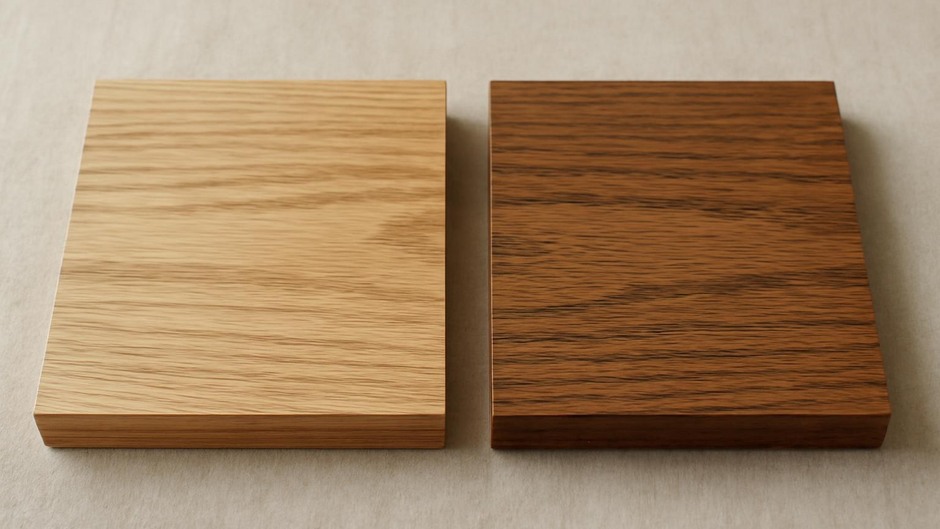
Water-based finishes tend to dry with clarity and less ambering over time, preserving the pale character of white oak. They can emphasize the precise grain pattern with a cleaner, more contemporary look. Oil-based finishes darken and warm the wood slightly, enriching tones and bringing a soft depth to the grain. Some makers prefer this warmth; others choose water-based coatings to retain the natural colour.
Application and working properties
Water-based finishes dry faster and may require more frequent, thinner coats. They are often low-odor and easier to work with indoors. Because they dry quickly, they can show brush marks if applied thickly or without attention to flow. Oil-based finishes have a longer open time, lending themselves to hand rubbing and blending during application. Their slower cure can make evening out lap marks simpler for beginners.
Surface feel and durability
When cured, water-based systems can form a hard film that resists scuffs and yellowing. They often feel slightly more polymeric to the touch. Oil-based finishes leave a more penetrating, tactile surface that many describe as warmer and less ‘plastic.’ Both systems can be formulated to offer good abrasion resistance; the differences show more in feel and aging than in everyday durability when properly applied.
Maintenance and repair
Repairs differ. Small surface scratches in a water-based finish are commonly treated by light sanding and spot-coating, which may require blending layers to match sheen. Because the film is more noticeable, feathering transitions takes care. Oil-based surfaces can be refreshed by light sanding and reapplying oil or varnish, often blending more invisibly because the finish penetrates. For larger repairs, both approaches benefit from stripping and reworking, but the oil-based option often allows local restoration without a full strip when the base material is stable.
Environmental and studio considerations
Water-based finishes typically have lower volatile organic compounds and less odor during application. They are convenient in small studios or shared spaces. Oil-based options often require mineral spirits for thinning and cleaning, and the fumes and disposal require a dedicated setup. Both are manageable with ventilation and sensible containment of waste materials.
Choosing a path
No single finish suits every project. A practical way to choose is to make small samples of the same oak and test the intended use conditions: heavy wear, food contact, or visible light exposure. Observe how the colour changes, how the surface feels under the hand, and how easy it is to restore after abrasion. Many makers keep both approaches available and match the finish to the object’s use and desired aesthetic.
Finishing is as much about future care as initial appearance. A system that makes periodic maintenance straightforward will keep oak looking well over years of handling, and a maker who understands the repair options can keep pieces in use rather than letting wear dictate replacement.